

Let’s create your account. It only takes a few seconds, then you can tap into all the benefits of our online account management tools, 24/7.
Pay your balance or view your payment history.
Get information about your plans or services and view invoices.
Manage your payments (including EasyPay), contact information and more.
View your summaries and other important documentation.
Call: 1-877-760-0075
Before we chat, we need some info to get the ball rolling.
* Required Information
One of our experts will get back to you as soon as possible.
Questions? Quote, Call or Chat Now.
1-844-567-9909
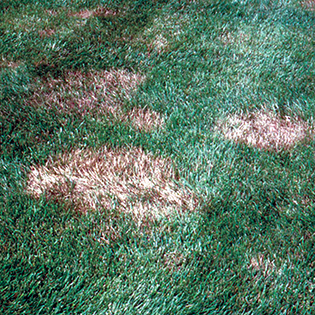
Brown Patch - Rhizoctonia solani
Brown Patch is a hot-weather lawn disease that is sometimes referred to as Large Patch or Rhizoctonia Blight. Brown Patch affects most types of grass across the country, with signs of damage appearing during late summer in the northern states and fall through mid-winter in the southern states.
Learn More
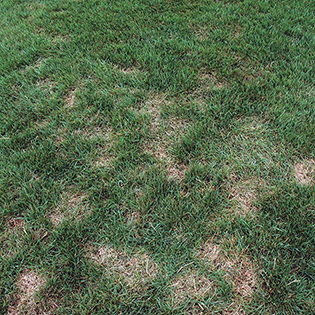
Dollar Spot - Sclerotinia homoeocarpa
Dollar Spot is a common lawn disease that marks your lawn with its namesake: silver dollar-sized patches. Dollar Spot typically affects all warm- and cool-season grasses across the country. Infections are most common during the summer months across northern states and during the spring and fall in southern states.
Learn More
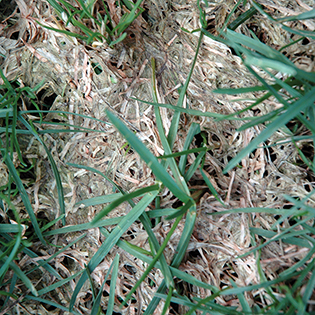
Pink Snow Mold - Microdochium nivale
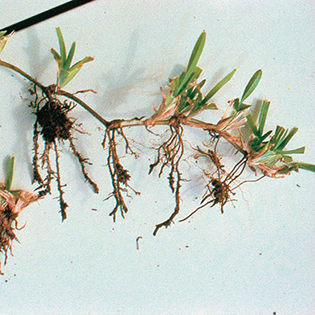
Pink Snow Mold stealthily develops underneath the cover of snow in colder climates. Also known as Fusarium Patch, this lawn disease attacks most types of cool-season grass in the northern part of the United States.
Learn More
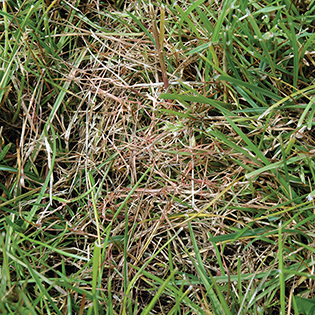
Red Thread - Laetisaria fuciformis
Red Thread affects all types of grass in the northern United States and is caused by the lawn fungus Laetisaria fuciformis. This lawn disease inflicts its most damage during mid- to late spring and late summer to early fall.
Learn More
Kentucky Bluegrass - Poa pratensis
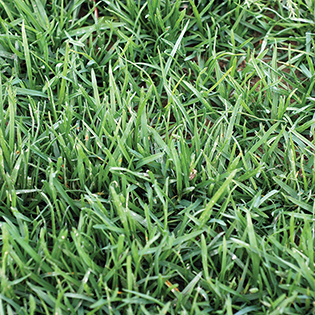
Despite its name, Kentucky Bluegrass is a cool-season turf grass that is originally native to Europe. The popularity of this type of grass for homeowners rests in the fact that is it perennial and sod-forming, making it ideal for home lawns. Kentucky Bluegrass also has excellent recuperative and reproductive capabilities, plus a greater tolerance to colder temperatures than some other cool-season turf grasses. That's why you'll find Kentucky Bluegrass in lawns throughout most of North America, though less commonly in warmer climates along the Gulf Coast.
Learn More
Bermudagrass - Cynodon dactylon
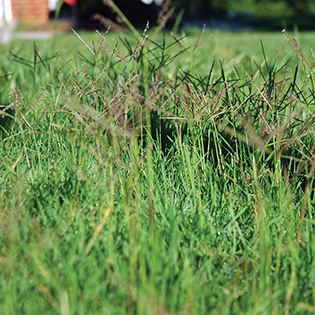
Bermudagrass is a perennial grass that is also known as Couchgrass, Wiregrass, Devil’s-grass or by its scientific name, Cynodon dactylon. It often is viewed as a lawn weed when it displaces desirable types of grass and becomes difficult to eradicate.
Learn More
Tall Fescue - Festuca arundinacea
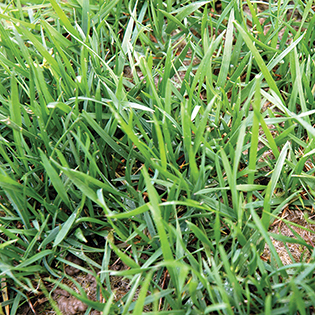
Tall Fescue is a cool-season turf grass that is well-adapted to either sunny or partially shaded areas. Known for its durability as well as its tolerance to traffic, heat and drought, it can be found in home lawns across North America. Certain varieties of Tall Fescue can contain endophytic fungi, which offer natural disease and insect resistance.
Learn More
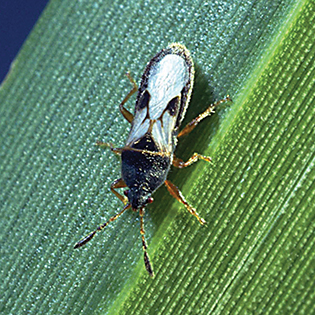
Hairy Chinch Bug - Blissus leucopterus hirtus
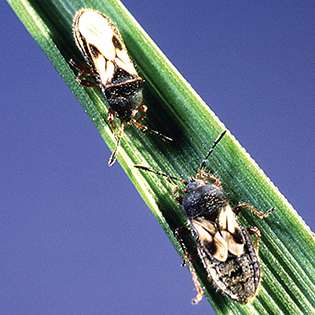
The Hairy Chinch Bug is a unique lawn-damaging insect that changes colors throughout each nymph stage. Also known as Blissus leucopterus hirtus, this lawn pest is typically found in the northeastern part of the United States, attacking Kentucky Bluegrass, Perennial Ryegrass, Creeping Red Fescue and Creeping Bentgrass.
Learn More
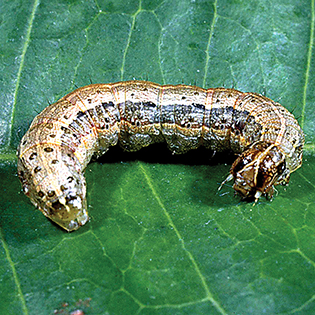
Fall Armyworm - Spodoptera frugiperda
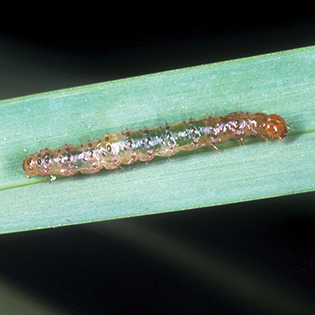
The Fall Armyworm is a lawn-damaging insect that can be found attacking Bermudagrass, Creeping Bentgrass, Ryegrasses and all Fescues. This lawn pest, also known as Spodoptera frugiperda, inhabits much of the United States east of the Rocky Mountains.
Learn More
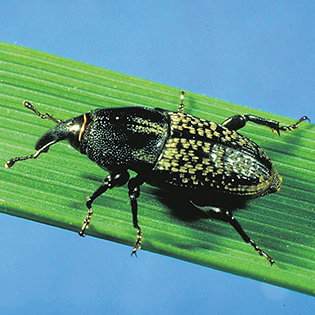
Bluegrass Billbug - Sphenophorus parvulus
The Bluegrass Billbug is a lawn pest that attacks Kentucky Bluegrass, Perennial Ryegrass, Fine Fescue and Tall Fescue. Its scientific name is Sphenophorus parvulus, and it can be found throughout most of the continental United States.
Learn More
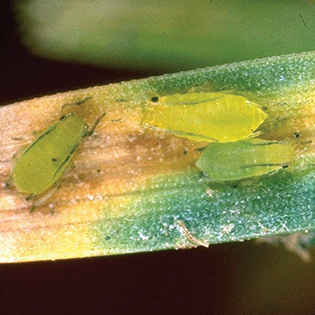
Greenbug Aphid - Schizaphis graminum
The Greenbug Aphid is a lawn-damaging insect that primarily attacks Kentucky Bluegrass, but can sometimes be found on Annual Bluegrass, Canada Bluegrass, Chewings Fescue and Tall Fescue. Also known as Schizaphis graminum, this lawn pest can infest most parts of North America and is often more of a problem in healthy lawns.
Learn More
Southern Chinch Bug - Blissus insularis
The Southern Chinch Bug is a unique lawn-damaging insect that changes colors, sizes and marking throughout each nymph stage. Also known as Blissus insularis, this lawn pest is typically found in the southeastern part of the United States attacking St. Augustinegrass, but is also occasionally found in Zoysiagrass, Bahiagrass, Bermudagrass and Centipedegrass.
Learn More
Green June Beetle - Cotinis nitida
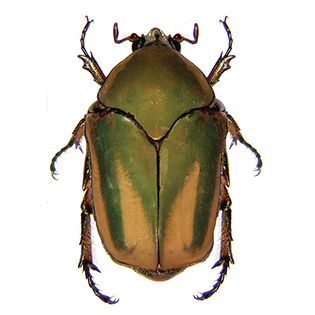
The Green June Beetle is a fairly large lawn-damaging insect that attacks many different types of grass from New York to Texas and parts of California. Also known as Cotinis nitida, most of the damage caused by this grub occurs during September and early October.
Learn More
Sting Nematode - Belonolaimus spp.
The Sting Nematode is a microscopic roundworm that primarily affects Bermudagrass and Bentgrasses in the southeastern and midwestern United States. Also known as Belonolaimus spp., this lawn pest prefers moist, sandy soils.
Learn More
Japanese Beetle - Popilla japonica
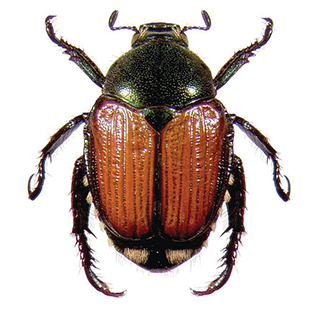
The Japanese Beetle is a very common lawn pest that can be found in many different types of grasses all throughout the eastern part of the United States and as far west as Nebraska. Also known as Popillia japonica, the grub stage of this lawn-damaging insect draws predators who can also damage lawns.
Learn More
Tropical Sod Webworm - Herpetogramma phaeopteralis
The Tropical Sod Webworm is a lawn pest that undergoes a metamorphosis, transforming from a caterpillar-like worm into a moth-like insect. Also known as Herpetogramma phaeopteralis, this lawn-damaging insect can be found in much of the southeastern United States, typically infesting St. Augustinegrass, Bermudagrass and Centipedegrass.
Learn More
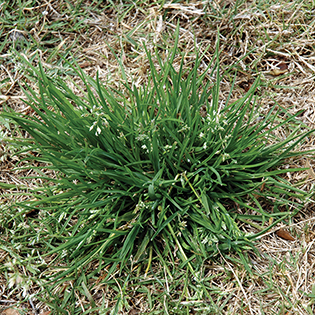
Annual Bluegrass Scientific Name: Poa annua -
Annual Bluegrass is an annual grassy weed that is also known as Annual Meadowgrass, Annual Spear-grass, Wintergrass, "Poa" or its scientific name, Poa annua.
Learn More
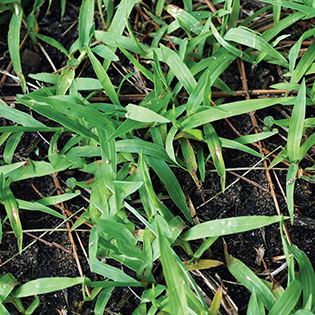
Smooth Crabgrass - Digitaria ischaemum
Smooth Crabgrass is a summer annual grass that is also known as Small Crabgrass or by its scientific name, Digitaria ischaemum. Due to its horizontal growth habit, look and inability to be controlled, it\'s often considered a problematic lawn weed in yards where it wasn\'t planted.
Learn More
Yellow Nutsedge - Cyperus esculentus
Yellow Nutsedge is a perennial herb that is considered a grass-like weed. This lawn weed is also known as Yellow Nut-grass, Chufa Flatsedge, Chufa, Earth Almond, Rush Nut or by its scientific name, Cyperus esculentus.
Learn More
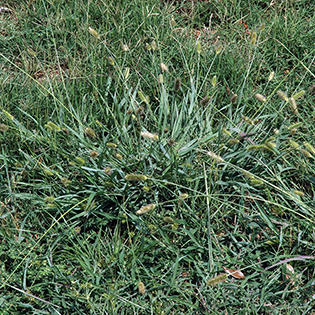
Green Foxtail - Setaria viridis
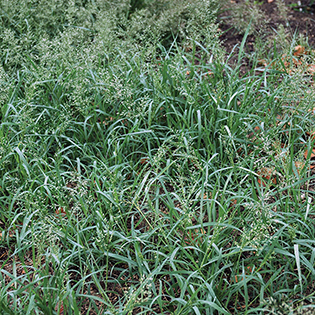
Green Foxtail is a clump-forming annual grassy weed that is also known as Green Bristlegrass or by its scientific name, Setaria viridis. This lawn weed gets its name from the appearance of its seed head.
Learn More
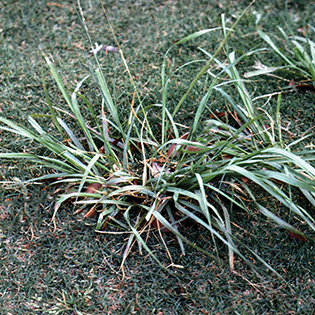
Smutgrass - Sporobolus poiretii
Smutgrass is a perennial grassy weed that is also known as Sporobolus indicus or by its scientific name, Sporobolus poiretii. This lawn weed produces seeds that are often infected by a smutty fungus, lending this plant its name.
Learn More
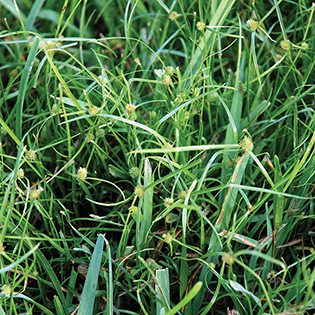
Green Kyllinga - Kyllinga brevifolia
Green Kyllinga is a perennial grassy weed that is also known as Perennial Kyllinga, Shortleaf Spike Sedge or by its scientific name, Kyllinga brevifolia. This lawn weed thrives in moist soils.
Learn More
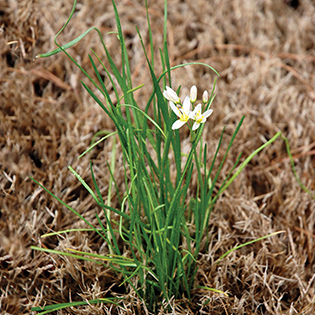
Star of Bethlehem - Ipheion uniflorum
Star of Bethlehem is a perennial grassy weed that is also known as Spring Starflower or by its scientific name, Ipheion uniflorum. This lawn weed is poisonous and can smell like onions.
Learn More
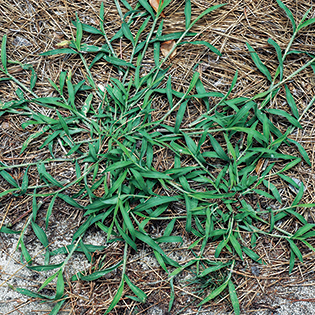
Hairy Crabgrass - Digitaria sanguinalis
Hairy Crabgrass is a summer annual grassy weed that is also known as Large Crabgrass or by its scientific name, Digitaria sanguinalis. These types of lawn weeds often require a professional application of a select crabgrass killer.
Learn More
Stinkgrass - Eragrostis cilianensis
Stinkgrass is an annual grassy weed that is also known by its scientific name, Eragrostis cilianensis. This lawn weed is named for the foul odor it emits when damaged.
Learn More
Dandelion - Taraxacum officinale
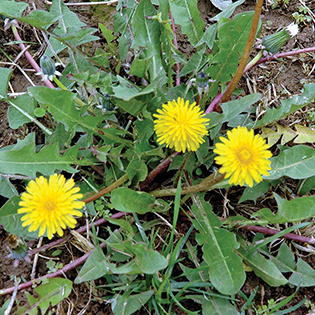
Dandelion is an extremely common taprooted perennial broadleaf weed. It is also known as Lentodon taraxacum, Lions-tooth, Blow-ball, Cankerwort and Taraxacum officinale.
Learn More
Oxalis - Oxalis stricta
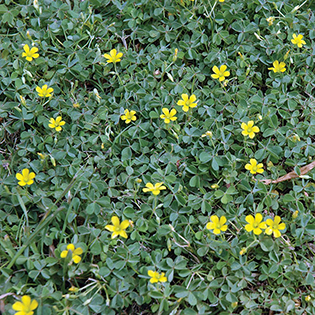
Oxalis is a perennial broadleaf weed that is also known as Common Yellow Oxalis, Yellow Woodsorrel, Sourgrass, Sheepsorrel and Toadsorrel. Its scientific name is Oxalis stricta.
Learn More
Common Chickweed - Stellaria media
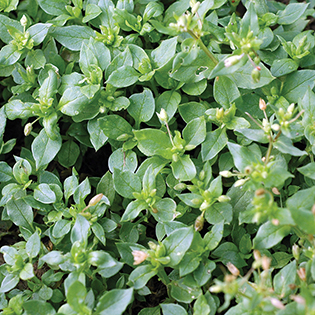
Common Chickweed is a winter annual broadleaf weed that is also commonly called Alsine media, Starwort, Starweed, Bindweed, Winterweed, Satin Flower and Tongue-grass. Its scientific name is Stellaria media.
Learn More
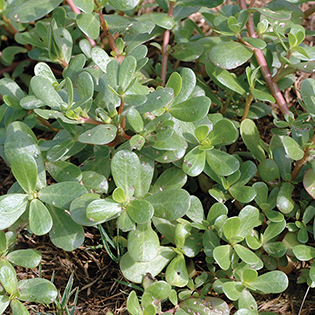
Purslane - Portulaca oleracea
Purslane is a summer annual broadleaf weed that is also known as Pusley, Pursley, Wild Portulaca and its scientific name, Portulaca oleracea.
Learn More
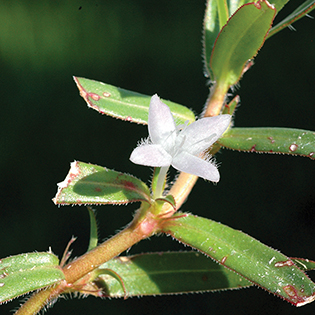
Virginia Buttonwood - Diodia virginiana
Virginia Buttonweed is a horizontally growing, creeping perennial broadleaf weed that is sometimes referred to as Diodia hirsuta, Diodia tetragona or simply as Buttonweed. Its scientific name is Diodia virginiana.
Learn More
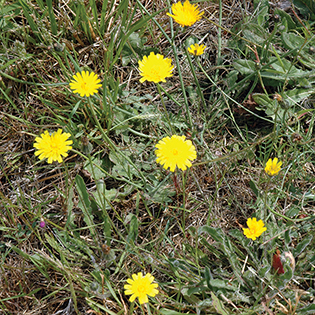
False Dandelion - Hypochoeris radicata
False Dandelion is a perennial broadleaf weed that is commonly referred to as Common Cat's-ear, Cat's-ear Dandelion and Hairy Cat's-ear. Its scientific name is Hypochoeris radicata.
Learn More
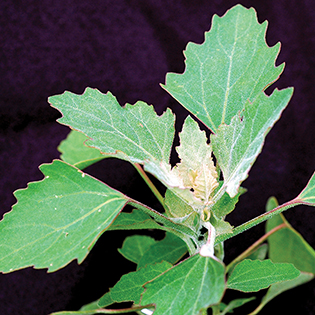
Lambsquarters - Chenopodium album
Lambsquarters is a warm-season annual broadleaf weed that is also commonly called Pigweed, White Goosefoot, Fat-hen, Mealweed, Frost-blite and Bacon-weed. Its scientific name is Chenopodium album.
Learn More
Purslane Speedwell - Veronica peregrina
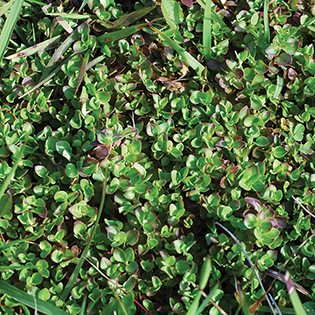
Purslane Speedwell is a winter annual broadleaf weed that is also known as Neckweed and Veronica peregrina.
Learn More
Virginia Dwarf Dandelion - Krigia virginica
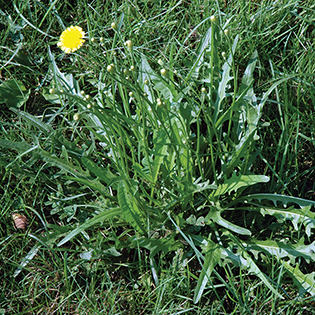
Virginia Dwarf Dandelion is a spring annual broadleaf weed that is also known simply as Dwarf Dandelion. Its scientific name is Krigia virginica.
Learn More

